What Is Multi Tenant Architecture: A 2026 Guide to SaaS
Published on · Updated on
Tags:
You add social publishing for your first customer. It works. Then the second customer arrives, and the weird problems start.
One team sees another team's draft post in a dashboard query. A bulk publish job from one client slows everyone else down. Token refreshes and background syncs pile up on the same workers, and now your support inbox is full of “why is this stuck” messages. If you solve that by spinning up a separate app instance for every customer, operations gets heavier every month.
That's where multi-tenant architecture stops being a buzzword and starts being the thing that determines whether your SaaS is maintainable. If you've been asking what is multi tenant architecture, the short answer is this: one application serves multiple customers, those customers share underlying resources, and the system must still keep each customer's data and performance isolated.
The hard part isn't the definition. The hard part is the engineering discipline behind isolation, fairness, scaling, and exits. That matters even more in API-driven products where one tenant's bursty workload can hit queues, databases, and third-party APIs all at once.
Table of Contents
Why Multi-Tenant Architecture Matters
You can get pretty far with a single-customer mindset. One database. One queue. One set of environment variables. One deployment path. The trouble shows up when “customer” becomes “customers,” and each one expects privacy, predictable performance, and fast feature delivery.
In SaaS, especially API-heavy systems, every new isolated instance creates more work. You patch more deployments, track more drift, and debug the same issue in multiple places. A shared setup is attractive because one software instance can serve multiple customers while keeping them logically isolated, which is the standard idea behind multitenancy.
But the reason developers care isn't abstract architecture purity. It's operational survival.
The pain usually starts with two failures
The first failure is data crossover. A careless query, missing tenant filter, or bad cache key can expose one customer's records to another.
The second failure is shared performance collapse. One customer runs a heavy sync, import, or publish burst, and other customers feel the slowdown immediately.
Practical rule: If your app can't answer “which tenant owns this request?” at every layer, you don't have a safe multi-tenant system yet.
Social publishing products are a good example because the workload is uneven. One tenant might schedule a handful of posts. Another might connect many social accounts and push a large job batch through the same workers and storage path. That's exactly where architecture choices start showing up in latency, support load, and release velocity.
A solid multi-tenant design gives you three things teams usually want at the same time:
Shared maintenance: One codebase and one deployment flow instead of one stack per customer.
Safer isolation: Tenant boundaries are enforced by the system, not by hope.
Better scaling behavior: You can add tenants without multiplying environments.
That's why what is multi tenant architecture isn't just a glossary question. It's a design decision that shapes your data model, auth flow, observability, and even sales conversations later.
Core Concepts of Multi-Tenant Architecture
The easiest way to understand multi-tenancy is to stop thinking about servers first and think about buildings.
The apartment building mental model
A multi-tenant app is like an apartment building. Everyone lives in the same building and shares core infrastructure like plumbing, elevators, and power. But each resident still expects a locked front door, private mail, and a utility bill that isn't affected by the neighbor leaving every light on.
That's what a multi-tenant system does in software. One application instance serves multiple customers, and each customer is a tenant. Their resources are shared underneath, but their data and configuration must stay separate.
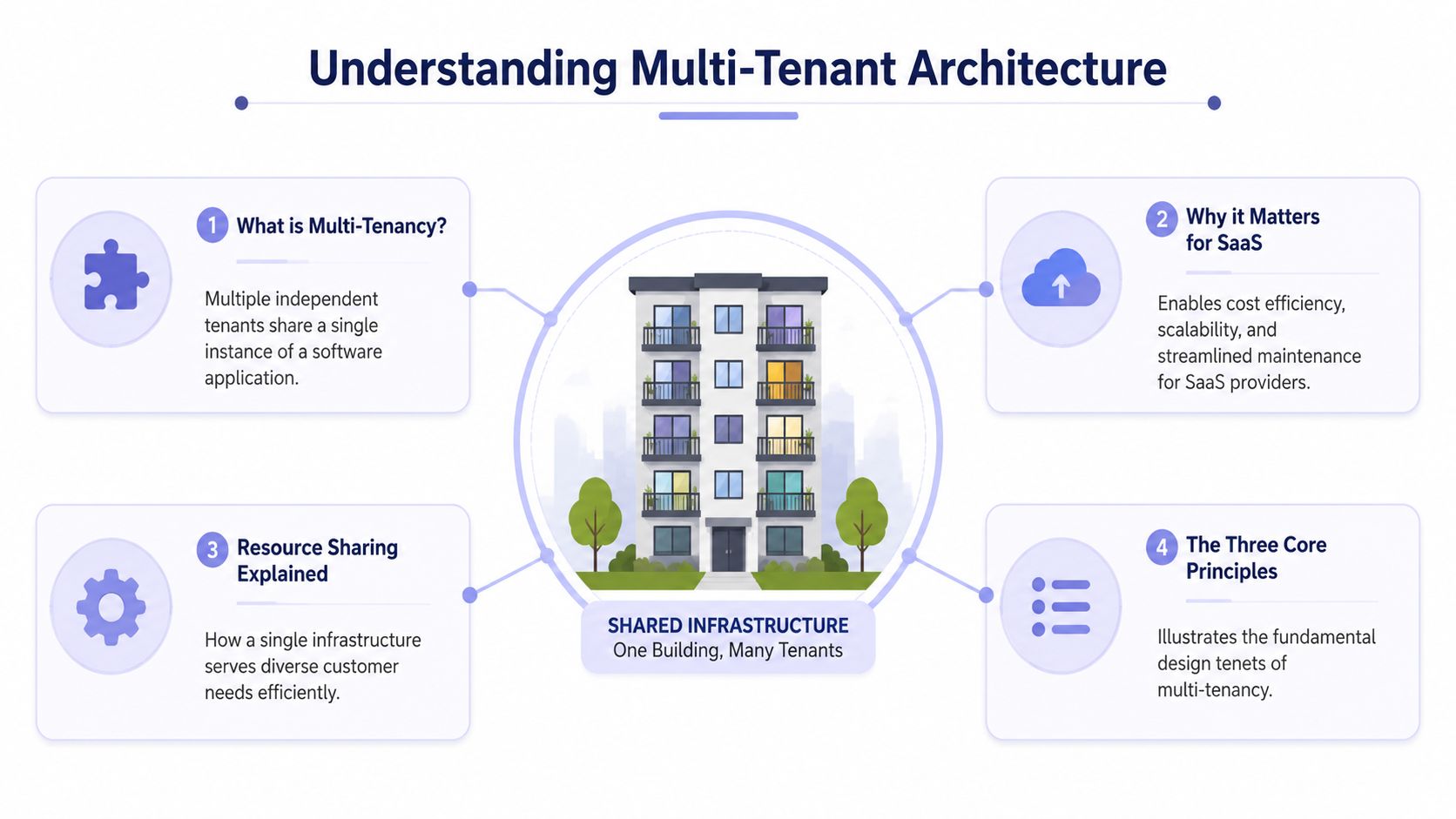 A diagram explaining multi-tenant architecture using an apartment building analogy to represent shared software infrastructure.
A useful phrase here is logical isolation. Tenants might share the same database cluster or app servers, but the system still enforces boundaries so they can't access one another's records.
One plain-English way to think about the data side is this statement from GeeksforGeeks on data isolation patterns: data isolation in multi-tenant systems is achieved through separate databases, separate schemas within a shared database, or logical data partitions.
The three levels where multi-tenancy happens
Most juniors first picture multi-tenancy as just “add tenant_id to tables.” That's incomplete. It happens across the stack.
Application level: The app knows who the tenant is and loads the right config, permissions, branding, and feature flags.
Database level: The data model stores tenant boundaries and enforces read and write separation.
Infrastructure level: Compute and runtime resources are shared, but the platform still limits blast radius.
If you're also thinking about secrets and tenant-scoped credentials, this is the same family of problem as API key management patterns. You need a clean identity boundary before you can build a clean data boundary.
A lot of confusion comes from the phrase “shared infrastructure.” Shared doesn't mean sloppy. It means the provider runs one coordinated system, and the software does the work of deciding what belongs to whom.
Later, when you're designing custom branding or per-customer behavior, this same model helps. The building is shared. The apartment interiors can still look different.
Before going deeper, this walkthrough is also worth a quick watch:
Comparing Tenancy Models
When people ask what is multi tenant architecture, they're often really asking which tenancy model they should pick. There isn't one universal answer. You're choosing between stronger isolation and simpler operations.
Three common models
The first model is shared schema with a tenant identifier. All tenants live in the same tables, and every row is tagged with something like tenant_id. This is efficient, but your application and database controls have to be disciplined. One missing filter is enough to create a bad day.
The second is shared database with separate schemas. Tenants still share a database server, but each tenant gets a separate schema. That usually gives you cleaner logical separation and can make some operational tasks easier, though schema management gets more involved over time.
The third is isolated instances per tenant. Each customer gets a dedicated app or database environment. This is straightforward to reason about, but you pay for it in operational overhead.
A useful framing from this overview of implementation levels is that multi-tenancy can be implemented at the application, database, and infrastructure levels. Those levels combine differently depending on the model you choose.
Tenancy model comparison
Model | Isolation Level | Complexity | Cost | Use Case |
Shared schema with tenant ID | Lower by default, depends on strong enforcement | Lower early, rises with scale and safety requirements | Lower | Fast-moving SaaS with many similar tenants |
Shared database with separate schemas | Medium | Medium | Medium | Teams that want more structure without full isolation |
Isolated instance per tenant | High | High operationally | High | Strict compliance, deep customization, premium enterprise setups |
A few practical selection cues help:
Choose shared schema if you need fast onboarding and your tenants mostly use the same product shape.
Choose separate schemas if your team wants a middle ground between efficiency and cleaner data boundaries.
Choose isolated instances if each customer needs deep customization or your sales process depends on strong physical separation.
Your first model doesn't have to be your final model. It does have to match the failure modes you can actually operate.
The mistake I see most is teams choosing the “safest sounding” model too early, then drowning in operational sprawl. The second mistake is choosing the “cheapest sounding” model and pretending tenant isolation is just a WHERE clause.
Design Patterns and Security Considerations
A secure multi-tenant system doesn't come from one trick. It comes from several controls lining up so a bug in one layer doesn't immediately become a cross-tenant incident.
Isolation has to exist at more than one layer
For SaaS platforms, tenant isolation can be enforced across database, application, and infrastructure layers. In one documented pattern for systems like PostPulse, PostgreSQL Row-Level Security binds every query to a verified tenant_id that comes from cryptographic JWTs at the gateway, and infrastructure fairness is reinforced with explicit ResourceQuota manifests to stop one tenant from taking all shared resources, as described in this secure multi-tenant architecture reference.
That's the important mindset shift. Security isn't “the app checks tenant_id.” Security is “the app, the database, and the runtime all agree on the same tenant boundary.”
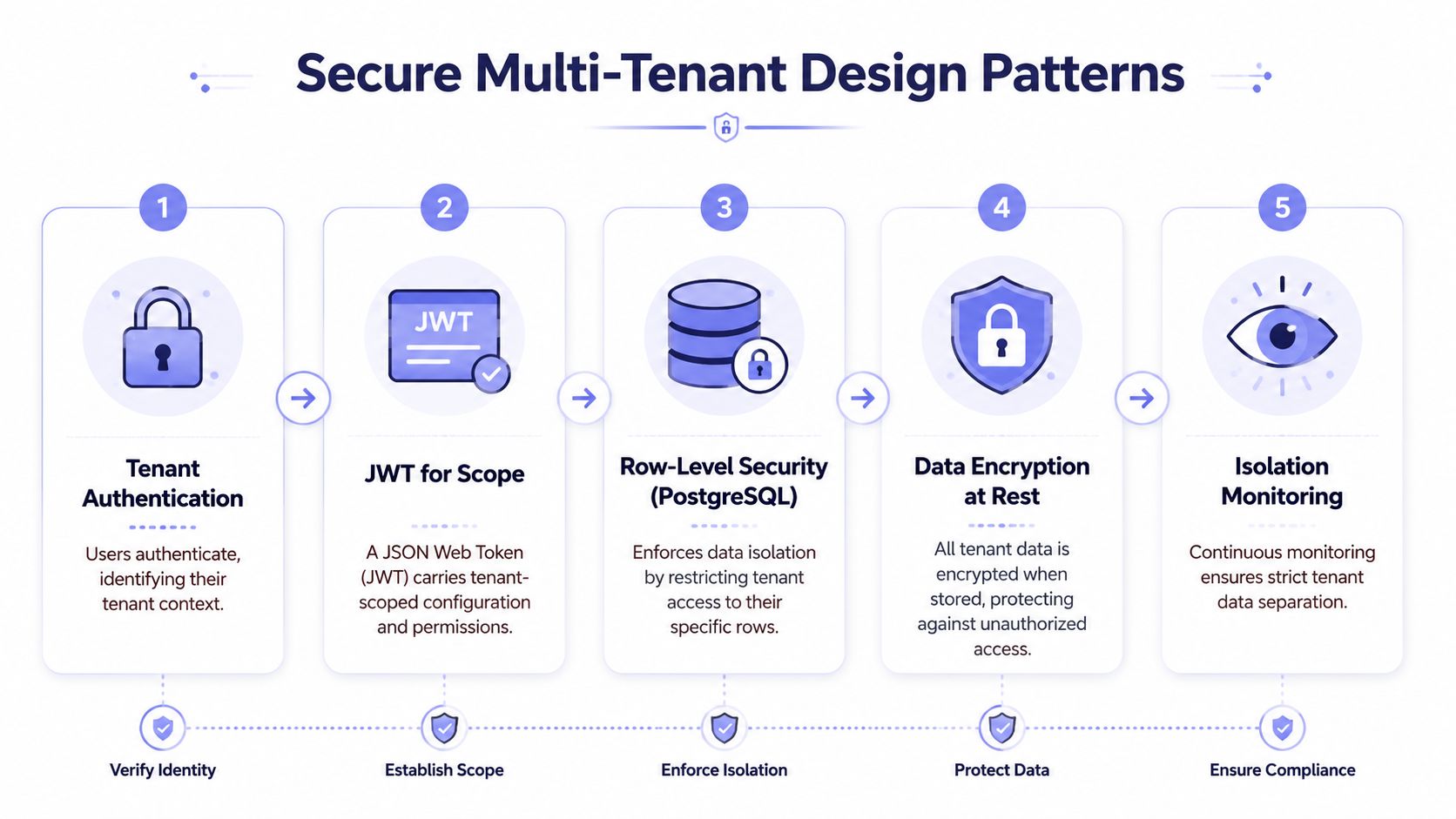 A diagram outlining five key design patterns for maintaining security in a multi-tenant software architecture.
If you're dealing with residency, retention, or audit expectations alongside tenant boundaries, this primer on 2026 data compliance for AI is a useful companion read because architectural isolation and compliance obligations usually collide in the same design review.
A practical enforcement pattern
A common production pattern looks like this:
That transaction-scoped set_config(..., true) detail matters when pooled database connections are involved. Without transaction scoping, tenant state can leak across reused connections.
At the application edge, the flow is usually:
Authenticate the user or service and validate the JWT.
Extract tenant context only from the trusted token, not from a client-supplied query parameter.
Set tenant state once for the request lifecycle.
Let the database enforce row access instead of trusting every repository method to remember the filter.
A proxy layer often becomes the right place to centralize some of that request shaping. That's one reason teams build patterns similar to this API proxy service approach, where auth, routing, and tenant-aware policy checks sit before downstream services.
If your tenant boundary depends on every engineer remembering every filter in every query, your isolation model is fragile.
Encryption at rest, audit logs, and least-privilege access still matter. They just don't replace tenant-aware enforcement. They support it.
Scaling Operational and Observability Concerns
Multi-tenancy gets interesting when production traffic stops being smooth. Tenants don't consume resources evenly, and social or API-driven workloads make that obvious fast.
Why noisy neighbors get expensive fast
In API-heavy SaaS, one tenant can create pain for everyone else. The documented noisy-neighbor pattern is blunt: without per-tenant rate limiting and partitioned job queues, a single high-volume tenant can degrade latency for 90% of other users by up to 40%, according to this analysis of noisy-neighbor impact in multi-tenant SaaS.
That's why naive autoscaling often disappoints. If you scale only on generic CPU, you can miss the resource that's saturating. In social publishing systems, more useful signals might be active social accounts, queue depth per tenant, or outbound publish attempts in flight.
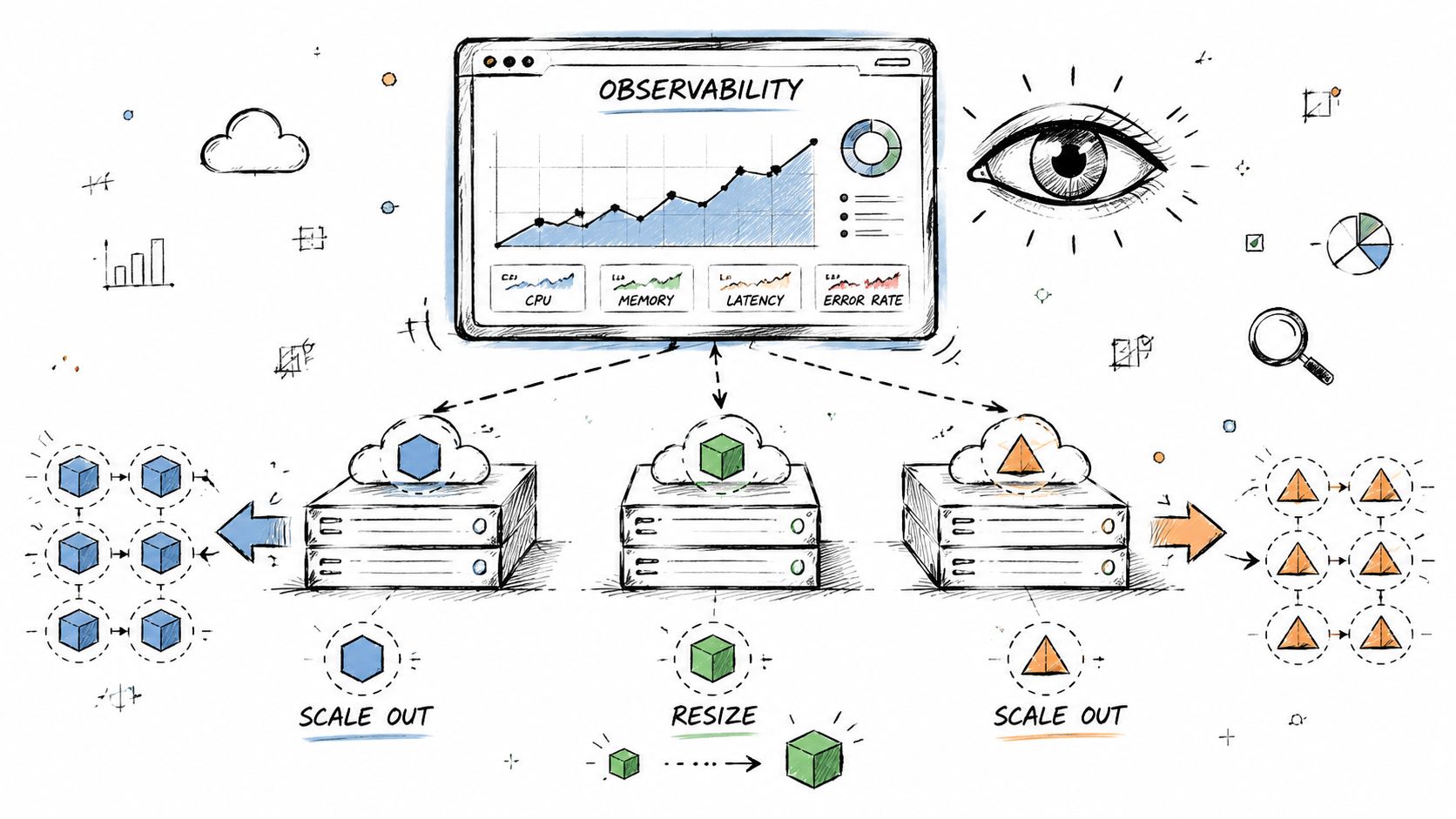 A hand-drawn illustration depicting a multi-tenant cloud architecture with observability dashboards, scaling processes, and resource monitoring.
What to watch in production
You need observability that answers tenant-specific questions, not just cluster-wide ones.
Per-tenant latency: Track request and job latency with tenant labels so you can see who is being affected.
Partitioned queues: Split background work so one heavy tenant doesn't monopolize workers.
Independent throttling: Apply rate limits at the tenant boundary instead of globally.
Structured logging: Include tenant identifiers in logs, but keep them sanitized and access-controlled.
Focused alerts: Alert on degraded tenants, queue buildup, and repeated throttling, not just node pressure.
This is also where automation becomes practical rather than decorative. If you're mapping out scaling and remediation workflows, exploring cloud automation components is useful context because a lot of multi-tenant reliability work is really policy-driven automation under load.
A healthy multi-tenant platform doesn't just scale out. It scales fairly.
Another caveat engineers often miss is database sharding. Shared systems sometimes need it, but only after simpler tools stop carrying the load. Read replicas, partitioning, and better workload separation usually come first. Sharding too early can make debugging and query planning worse, especially when transactional traffic and analytics compete for the same primary.
Migration Strategies and Cost Implications
Multi-tenant architecture isn't typically the initial approach. Development often begins with whatever ships. Eventually, organizations inherit customers, custom logic, and one-off infrastructure choices that were never meant to scale cleanly.
A migration path that doesn't blow up production
A decent migration starts with inventory, not code.
Find tenant-specific behavior. Look for hardcoded domains, custom feature branches, and customer-specific tables.
Define tenant identity centrally. Pick one canonical tenant identifier and make every service consume it the same way.
Refactor data ownership. Add tenant-aware access patterns before moving everybody into shared infrastructure.
Migrate in slices. Move low-risk tenants first, keep rollback paths, and compare outputs.
Prove exit paths early. Don't wait until enterprise procurement asks how a customer can leave.
That last point is underappreciated. Teams spend months on tenant entry and almost none on tenant exit.
The hidden cost isn't just infra
Multi-tenant architecture can reduce infrastructure costs by 40 to 60% compared with single-tenant deployments because compute, storage, and network resources are pooled, as described in AWS guidance on multi-tenant architectures. That savings is real, but it's not the whole financial story.
A less discussed risk shows up in enterprise sales and churn. A 2025 analysis says 65% of enterprise SaaS contracts mandate instant, clean data export, and shared-schema designs make exports 3x slower and more error-prone than isolated-instance models, according to this write-up on data export risk in shared-database systems.
That means your architecture affects not only hosting costs, but also procurement friction and customer trust. If a white-label agency asks, “Can I extract all client data cleanly if I leave?” your answer can decide whether the deal moves forward.
A few candid trade-offs:
Shared infrastructure saves money early, but only if you invest in fair scheduling, quotas, and telemetry.
Enterprise-ready exports aren't optional once bigger contracts enter the pipeline.
Hybrid migration paths often win. Some tenants fit a shared model. Others justify stronger isolation.
Examples for SaaS Builders
Theory sticks better when you can see how tenancy choices change a real product flow.
A private-label publishing API example
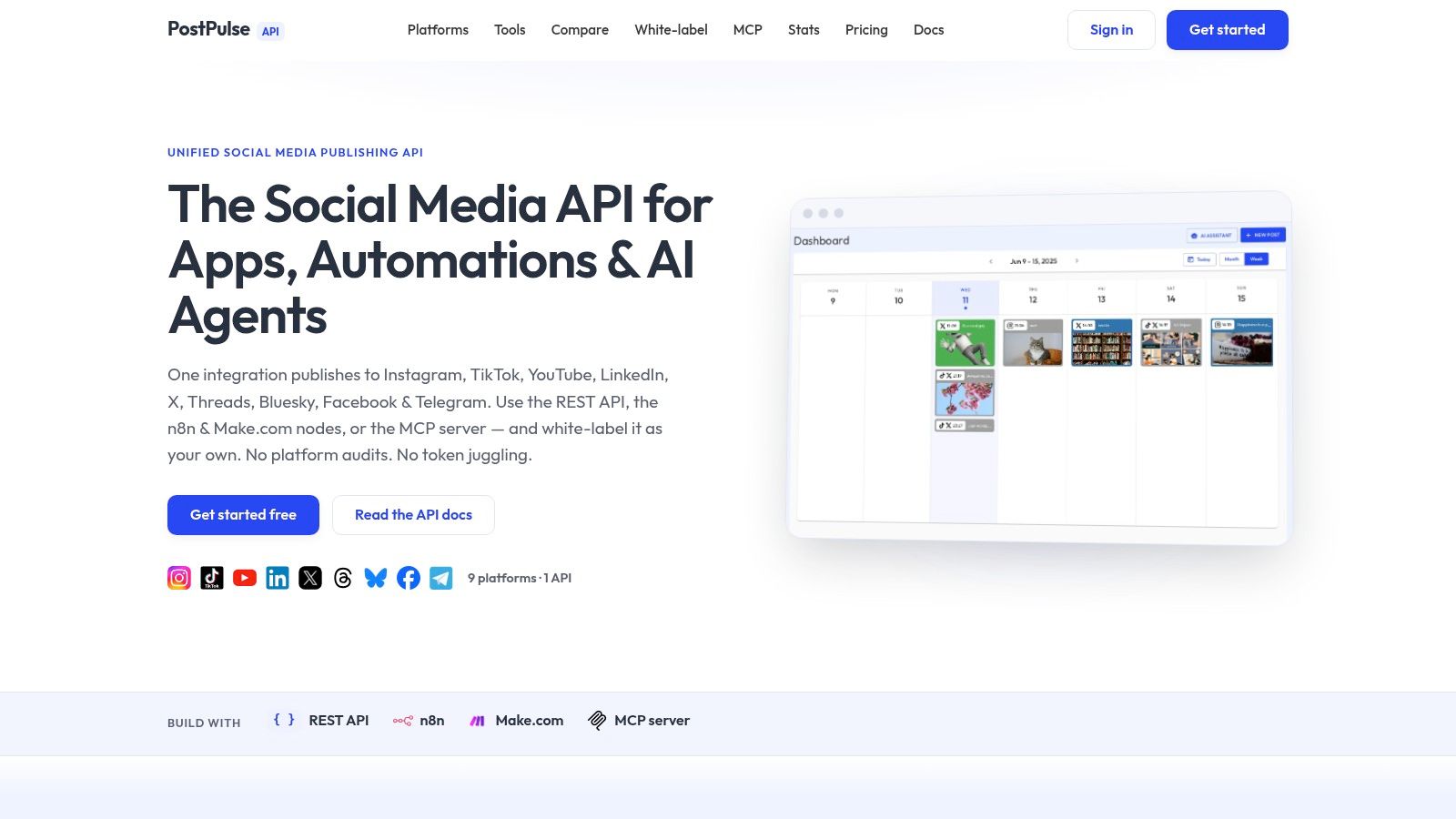
Say you're building a product that lets users schedule and publish social content from your own UI. You want one backend integration, but each customer must connect their own social accounts and only access their own scheduled posts, media, and publish history.
In that setup, a shared application with strict tenant scoping usually makes sense. Your API might receive a request, resolve the authenticated tenant, write records tagged to that tenant, and send background publish jobs into a queue partition associated with that tenant.
 Screenshot from https://post-pulse.com
A stripped-down shape could look like this:
The application shouldn't trust that tenant_id from the payload alone. It should derive tenant ownership from the authenticated request context, then verify the referenced resources belong to that same tenant before enqueueing the job.
A white-label agency example
Now switch to an agency platform. The agency wants a branded experience for many downstream clients. Those clients may never know the underlying publishing system is shared.
That changes the shape of tenancy. The top-level tenant might be the agency, but the platform may also need a sub-tenant concept for the agency's own customers. Branding, permissions, workspaces, analytics views, and export boundaries all become tenant-aware.
If you're working through that distinction, this guide on what white-label software means in practice is a useful framing because white-label architecture often needs both surface customization and strict separation underneath.
A few practical differences appear quickly:
Private-label integration: Usually focuses on secure API access, customer-owned connected accounts, and app-level publishing controls.
White-label delivery: Adds branded UX, delegated administration, and cleaner data ownership boundaries for resellers or agencies.
Operational shape: The more layers of “customer of a customer” you support, the more carefully you need to model tenant hierarchy.
Build the tenant model for the business relationship you actually have, not the one that seems simplest in the first sprint.
That's one of the easiest places to make a costly mistake. A flat tenant model feels fine until you need agency-level oversight and client-level isolation at the same time.
Conclusion and Next Steps
A good answer to what is multi tenant architecture is simple on paper and demanding in production. One shared system serves many customers. Each customer stays isolated. The platform remains efficient to operate.
The interesting part is where teams usually get burned. Isolation has to be enforced across application, database, and infrastructure layers. Scaling needs tenant-aware queues, throttling, and observability, not just more pods. Migration planning has to include exit planning, because data export can become a sales blocker long after the first version ships.
If you're evaluating your own design, check these questions first:
Can every request be tied to one verified tenant identity?
Does the database enforce tenant boundaries, not just the app code?
Can one busy tenant be throttled without hurting everyone else?
Can a tenant's data be exported cleanly if they leave?
Does your model match your business structure, including agencies or resellers if relevant?
If the answer to any of those is “sort of,” that's where the architecture work should start.
If you're building social publishing into a product and want to avoid maintaining separate integrations for every platform, PostPulse gives you one integration for publishing across 10 platforms through a REST API, official n8n and Make.com nodes, or an MCP server, with options for both private-label and fully white-label workflows.
About the Author

Founder of PostPulse — a social media scheduling platform for creators and teams. Software engineer with a passion for building developer tools and simplifying complex API integrations across social media platforms.