Nature Hashtags for Instagram: 10 Best Sets for 2026
Published on
Tags:
You post a clean shot, tag #nature and #scenery, then watch it get buried before lunch. That's the normal failure mode now, because the biggest nature tags are so saturated that a good post can disappear under fresher uploads, mismatched intent, and no real publishing plan. The fix isn't “more hashtags”, it's a tighter set of nature hashtags for Instagram that match the content, the audience, and the place you're shipping from. If you're testing those sets across platforms and timezones, tools like PostPulse make that a lot less manual, because you can push one post to multiple networks instead of redoing the same work everywhere. For a quick companion read, the practical breakdown in hashtag tips for Instagram creators is worth keeping open.
Table of Contents
1. Landscape & Scenic Photography (#landscape #nature #scenery)
2. Wildlife & Animal Conservation (#wildlife #animals #conservation)
5. Water & Marine Environments (#ocean #water #marine #seascape)
6. Botanical & Plant-Based (#plants #flowers #botanicalphotography #plantbased)
7. Mountain & Peak Photography (#mountains #peaks #alpinephotography #mountainlife)
8. Sunset, Sunrise & Golden Hour (#sunset #sunrise #goldenhour #goldenlight)
9. Seasonal Nature Content (#spring #autumn #winter #summer #fallfoliage)
1. Landscape & Scenic Photography (#landscape #nature #scenery)
Broad tags still sit at the center of nature discovery, and that's exactly why they're so messy. #nature is one of Instagram's largest nature-related tags, with 856+ million posts reported in a 2026 social-media reference, while #naturephotography is also huge at 106,784,076 posts in another hashtag directory, which means the broad entry point is real but brutally crowded. The same ecosystem also shows long-term momentum, because one guide cited #nature at more than 330 million uses as of June 2018, so this isn't a passing trend, it's a mature attention market. Source context
The move that works is mixing the wide tag with intent markers. If you shoot coastlines, mountain passes, or wide scenic frames, pair #landscape with narrower tags like #alpinephotography or location tags such as #banff and #moraineelake so you're not relying on the noisiest part of the funnel. The practical win is segmentation, not volume. A generic tag says “nature”, but a location tag says “someone who cares about this place”.
Ship it like a set, not a single tag
Practical rule: one broad discovery tag, two niche tags, one location tag. That's usually a better trade-off than stuffing the caption with five near-identical variants.
A real-world pattern here is easy to spot. National Geographic's travel posts are built for scale, travel photographers often layer broad tags with place tags, and stock-photo teams lean on #scenery for seasonal work because it stays visually legible to humans even when the tag stream is saturated. If you're testing this in a publishing tool, use different time slots for Europe, North America, and Asia-Pacific audiences, then compare saves and profile taps, not just likes. PostPulse is useful here because one scheduling pass can publish the same visual asset across Instagram, TikTok, and LinkedIn, which makes timezone testing less painful than hand-posting everywhere.
For a related workflow angle, the publishing mechanics in Instagram photography hashtags for growth pair well with this category.
2. Wildlife & Animal Conservation (#wildlife #animals #conservation)
Wildlife tags behave differently from scenery tags because the audience comes in with intent. People searching #wildlife usually want animals, behavior, species, or conservation context, not just a pretty background. That gives you better signal quality, especially when the caption names the animal directly instead of hiding behind generic cuteness. A post about a red panda usually earns more relevant attention when it uses species-specific language than when it leans on broad filler tags.
Media works better here than in most nature niches, because motion adds context. Bird dives, herd movement, rescue work, and sanctuary updates all give viewers a reason to stop scrolling. If you're posting from a creator account or a nonprofit desk, treat this like education content first and aesthetic content second.
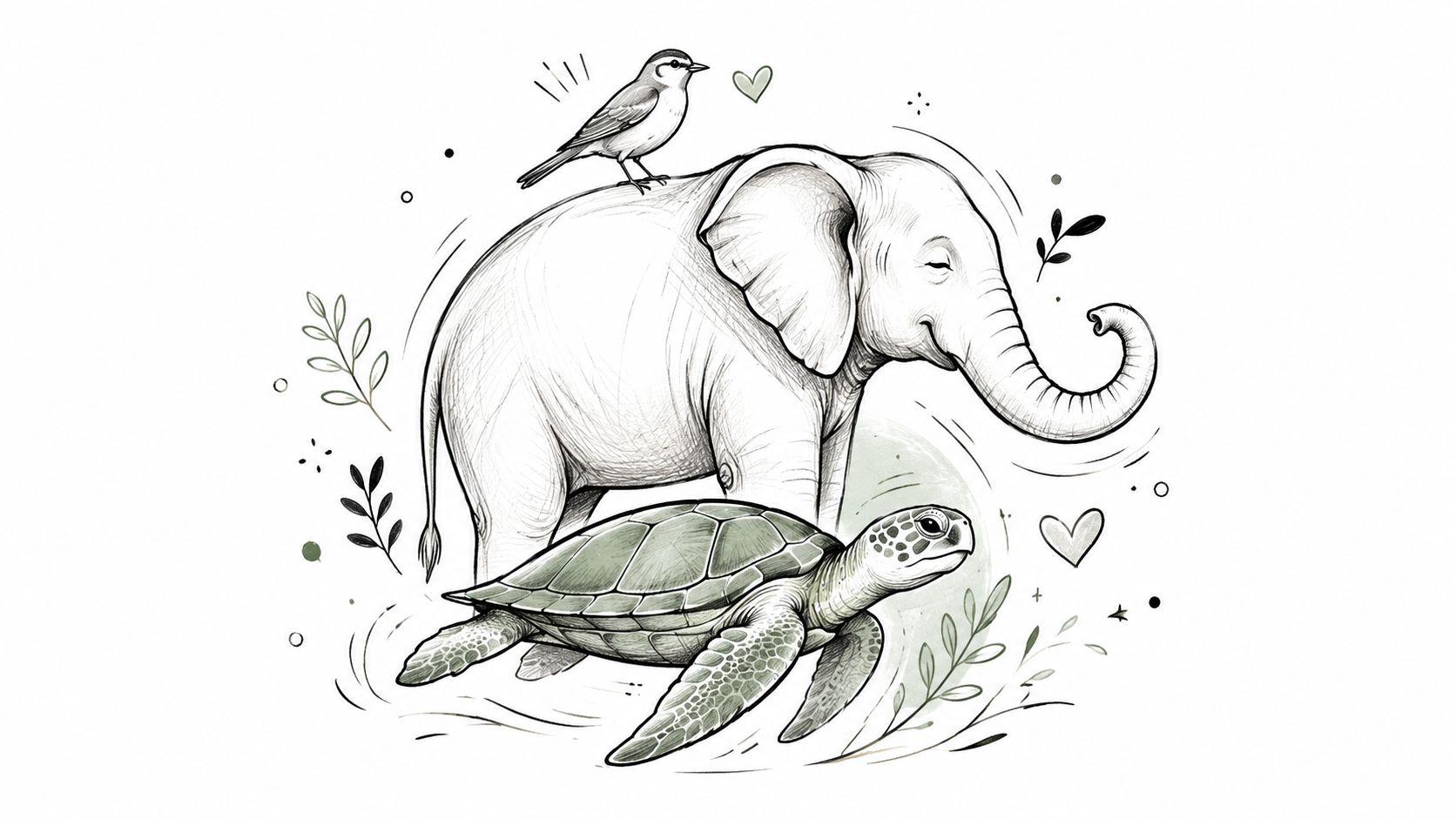 A gentle pencil sketch of an elephant, a sea turtle, and a bird surrounded by botanical elements.
A few useful patterns show up again and again:
Use species names in the caption: #redpanda or #orangutanconservation is more useful than #cute.
Anchor with conservation intent: #conservation and related terms help pull in nonprofit and advocacy audiences.
Prioritize short-form video: Reels and TikToks usually fit wildlife behavior better than a still frame.
Cross-post the same asset carefully: a rescue clip can work on Instagram, TikTok, and YouTube Shorts without changing the core edit.
BBC Earth's animal clips, WWF-style behind-the-scenes conservation posts, and niche herpetology creators all show the same thing, the audience here is smaller but more deliberate. That's why a publishing stack matters. If one wildlife post can be scheduled once and distributed across Instagram, TikTok, YouTube Shorts, and Threads, you spend less time retyping and more time checking whether a species-specific tag set brought the right comments.
3. Hiking & Outdoor Adventure (#hiking #trekking #outdoors)
Hiking tags pull in a different kind of viewer. They don't just want to admire the trail, they want trail names, difficulty, timing, gear, and whether the route is worth the drive. That makes #hiking and #outdoors better for action-oriented posts than for static “look at this view” content. The audience is researching, booking, or planning, which is why these tags tend to be stronger for gear brands, trail creators, and tourism accounts.
The best posts in this bucket feel useful. AllTrails-style trail reviews, regional hiking accounts, and adventure agencies all use the same basic formula, a clear route, a helpful caption, and a tag mix that connects the trail to the audience's next trip. If you're posting from a brand account, intent beats vanity.
Use geography to cut through the noise
A plain #hiking tag is too broad on its own. Pair it with trail-level or region-level tags such as #moraine, #canadianrockies, or a route-specific tag so you're not waiting for a random algorithm hit. Add difficulty markers like #easytrail or #moderatehike when the post is aimed at a narrower audience segment.
Practical rule: hiking content should answer three questions fast. Where is it, how hard is it, and why should I care?
This is also a good place to automate. Seasonal trail guides, pre-season planning posts, and gear roundups all repeat, so a scheduler saves real time. PostPulse can handle that kind of repeatable calendar work across Instagram, Threads, and LinkedIn, which matters if you're posting the same trail advice for hikers, travel planners, and outdoor retailers. For a direct publishing walkthrough, the mechanics in automated posting on Instagram fit this use case well.
4. Forest & Woodland (#forest #woods #woodland #rainforest)
Forest content sits in a useful middle ground. It can be purely visual, but it also connects cleanly to wellness, environmental messaging, and contemplative content. That's why #forest is stronger than it first looks, especially when the caption leans into mood, species detail, or a quiet narrative instead of just “nice trees”.
The category has also blurred into wellness. Forest bathing, mindfulness, and nature therapy sit naturally beside woodland photography, so a post can speak to both photographers and people looking for calmer content. That dual audience is the advantage. You're not only targeting outdoor fans, you're also reaching wellness viewers who may save the post for a different reason.
Make the mood do the work
If your image is misty, dark, or layered with canopy detail, let the visual lead and let the tags reinforce the atmosphere. A combination like #forest, #forestbathing, and #naturetherapy can make sense for a meditation clip, while a rainforest post can lean harder into ecology and climate language. Pairing #rainforest with sustainability framing pulls the content toward the right communities.
Photography collectives, eco-tourism operators, and climate-focused feeds all use this bridge well. A forest post can be a nature scene, a wellness post, or an advocacy post depending on what sits in the caption. That flexibility is why it works so well in batch publishing workflows.
When you're scheduling contemplative content, consistency matters more than virality. A single post may not spike, but a steady forest series builds a recognizable feed pattern. PostPulse is handy here because one request can distribute meditative content across Instagram, Threads, Bluesky, and TikTok without you rebuilding the same asset four times. That's the kind of boring operational win that keeps a niche content engine alive.
5. Water & Marine Environments (#ocean #water #marine #seascape)
Water content almost always performs differently from land content because it moves. Waves, tides, reflections, snorkel footage, and dockside scenes all create instant visual motion, which gives #ocean and related tags more stopping power than a still scenic shot. That's why this category often sits at the intersection of travel, conservation, and lifestyle.
Trade-off is audience ambiguity. A beach resort, a dive clip, and a marine cleanup video may all use the same broad tags, but the people behind the scroll want very different things. Luxury travel viewers respond to mood and escape. Conservation viewers respond to species, pollution, and habitat language. If your tags don't separate those two, you'll attract the wrong comments.
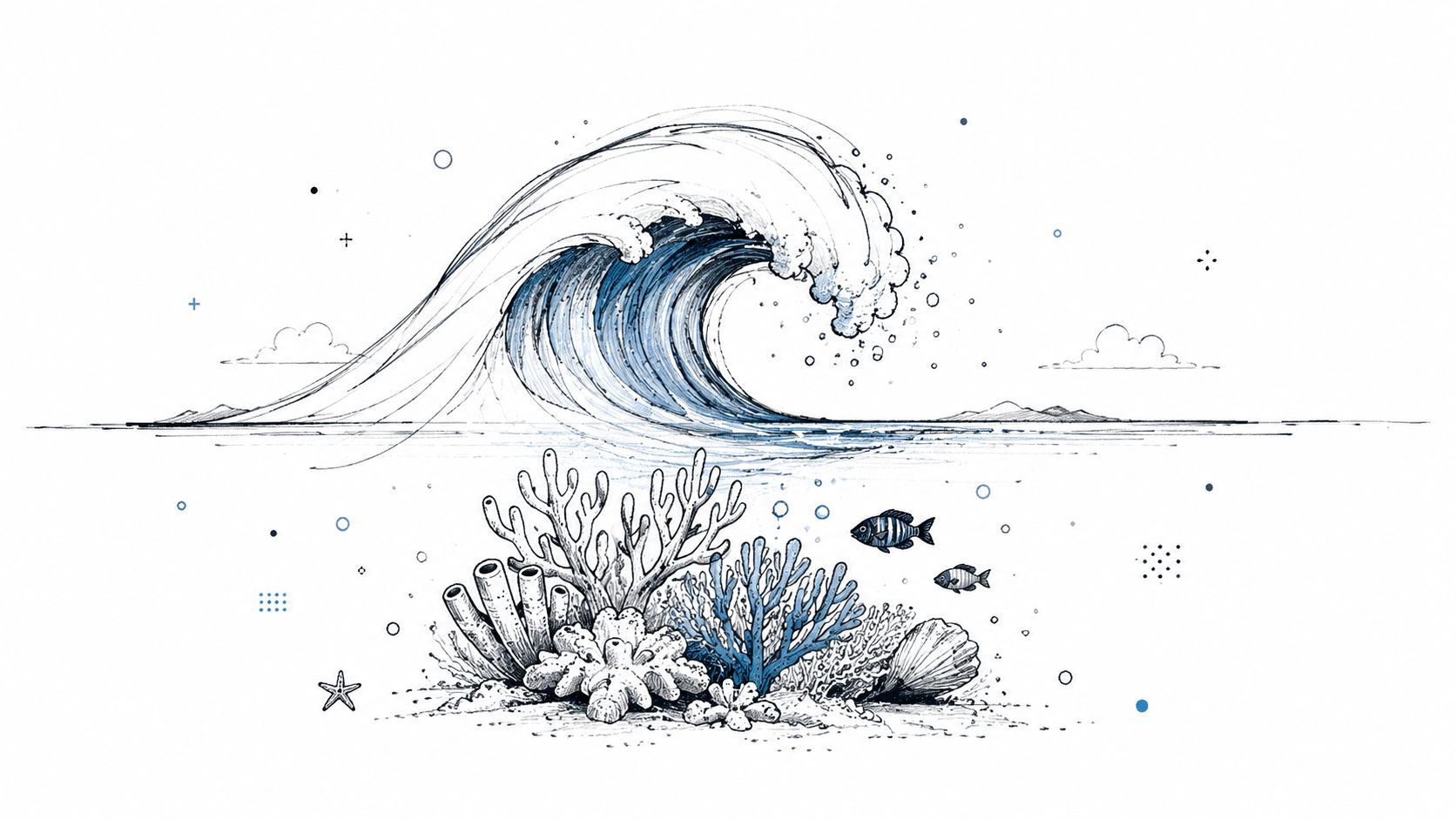 A detailed ink sketch illustration featuring a large crashing ocean wave above a vibrant coral reef.
A cleaner setup is to layer broad and specific communities:
For divers: use #divingadventure or #divingcertified with location cues.
For surfers: use #surfersofinstagram to find the right subculture.
For conservation: use language like #marineprotectedarea or pollution-related tags.
For travel brands: keep the visual language aspirational, then add one clear marine tag.
National Geographic-style ocean conservation posts and cleanup campaigns show how flexible this niche can be. The same underwater sequence can serve education, tourism, or activism depending on the caption and the tag set. If you're publishing at scale, a unified API helps because the format can branch by platform without changing the core video. One underwater clip can go to Instagram Reels, TikTok, and YouTube Shorts at the same time, which is exactly where a tool like PostPulse earns its keep.
6. Botanical & Plant-Based (#plants #flowers #botanicalphotography #plantbased)
Plant content is one of the most dependable nature categories because it's specific without being fragile. People who follow #plants or #botanicalphotography usually care about care tips, styling, propagation, or plant design, not just a pretty leaf. That makes the audience easier to convert if you sell products, digital downloads, or wellness-adjacent content.
The key mistake is staying too broad. Generic plant tags can get you reach, but they don't always get you buyers. A Monstera post, a pothos care carousel, and a botanical illustration sell different things, and the hashtags should reflect that.
Niche down before you post
Use plant names when you can. #monstera, #pothos, and #fiddleleaffig are more useful than a plain umbrella tag when the goal is to reach people who keep plants alive. That same logic applies to content calendars. Seasonal care posts, repotting tips, and indoor plant styling all repeat, so it makes sense to schedule them in batches.
For creators and product sellers, this is one of the easiest places to pair content with commerce. Nursery accounts, plant delivery services, and botanical illustrators all benefit from the same pattern, one visual asset, one clear care angle, one conversion path. If you're moving from inspiration to sales, e-commerce links and post formatting matter more than another generic hashtag dump.
Practical rule: if the post is about a specific plant, say the plant's name in the caption and in the tags. General plant audiences are broad, but buyers usually search narrower terms.
A scheduling stack helps because plant content follows seasons and growth cycles. PostPulse can push monthly botanical tips to Instagram, TikTok, and Threads from one request, which is useful if you're managing a nursery feed, a plant brand, or a creator account that needs consistent cadence without daily manual posting. For presentation polish, the formatting tricks in Instagram text formatter are a good companion.
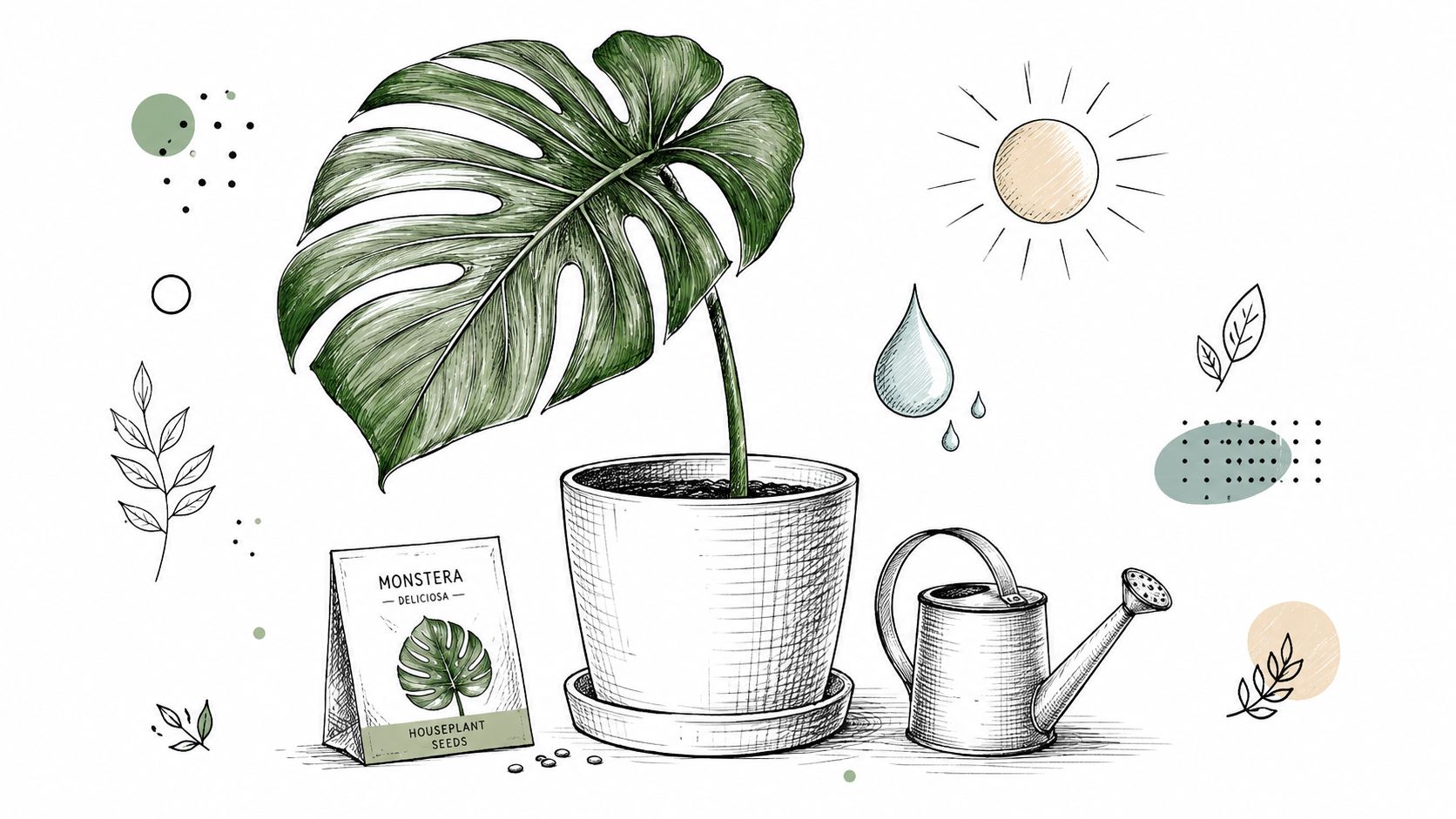 An illustrated monstera deliciosa plant in a ceramic pot next to a seed packet and watering can.
7. Mountain & Peak Photography (#mountains #peaks #alpinephotography #mountainlife)
Mountain tags are just a sharper version of scenic tags, and that sharpness helps. #mountains and #alpinephotography attract climbers, mountaineers, trail planners, and adventure travelers who already know what they're looking at. That means lower saturation and better audience intent than a generic scenic post.
The content usually does better when it feels earned. Summit attempts, ridge walks, expedition prep, and mountain guide footage all signal effort, which is why the audience responds more strongly than it does to an ordinary scenic overlook. The people following this space are often participating, not just admiring.
Add the peak, not just the panorama
If the post shows a named summit, say it. #mounteverest, #denali, and #eiger are useful because they match how serious outdoor audiences search. Add terms like #mountainadventure or #expeditionlife when the post is part of a broader travel or guide narrative.
Outdoor brands, climbers, and alpine tour operators all benefit from that specificity. A gear brand can use the same mountain image to talk about equipment, while a guide service can use it to talk about bookings, safety, and season timing. Those are different business goals, so they shouldn't share the exact same caption strategy.
Post timing matters too. Climbing season creates its own rhythm, and mountain content should reflect that instead of posting randomly year-round. If you're distributing the same image to Instagram, LinkedIn, and TikTok, a platform-aware publishing layer helps you keep the right angle for each audience. PostPulse works well here because one scheduling pass can handle the same mountain story across creator, travel, and B2B surfaces without manual repetition.
8. Sunset, Sunrise & Golden Hour (#sunset #sunrise #goldenhour #goldenlight)
Golden hour tags work because they sell mood, not just scenery. People searching #goldenhour are usually looking for warmth, atmosphere, and timing, which makes these tags flexible across travel, lifestyle, wellness, and photography. A sunrise meditation post and a sunset property tour can live in the same tag family without feeling forced.
The rhythm is also predictable, which is rare on Instagram. You get one sunrise and one sunset per day, so the content source is recurring instead of random. That makes this one of the easiest categories to systematize if you're serious about consistent posting.
Time the post around the mood
The post itself doesn't need a giant caption. It needs a clean visual and a time-aware tag set. Pair #goldenhour with a location tag like #sunsetinbali or #sunriseinsantorini if you want geography-specific discovery, or with a use-case tag like #yogaatsunrise if the goal is wellness crossover.
Travel creators, photographers, and even real estate accounts all use this pattern because it softens the frame. The same home shot looks better at sunset, and the same beach looks different at dawn. That's not a gimmick, it's a useful way to make a post feel intentional.
Practical rule: if the light is the hook, post while people are still planning their day. Late timing wastes the emotional lift.
To keep that cadence steady, automated scheduling is the difference between “I post sunrise sometimes” and “the feed has a pattern.” PostPulse can batch a week of golden hour content across Instagram, TikTok, and Threads, so you're not scrambling before every dawn or dusk. For timing details, the workflow in best time to post on Instagram today is a solid match for this format.
9. Seasonal Nature Content (#spring #autumn #winter #summer #fallfoliage)
Seasonal tags are the easiest way to build a repeating calendar because nature itself does half the work. #spring, #winter, and #fallfoliage map directly to changes people already care about, from travel planning to home decor to outdoor activities. That makes the audience more predictable than it is for a generic nature tag.
The strong play here is lead time. People plan trips, purchases, and content themes before the season peaks, not after it's already in full swing. If you wait too long, your post lands when everyone else has already posted the same seasonal shot.
Batch early and ship on schedule
Travel boards, garden centers, and retail brands all benefit from this logic. Spring planting content works before the season feels obvious, and winter getaway posts should hit before the holiday fatigue settles in. The same is true for fall content. If you publish too late, you're posting into the tail end of the conversation.
A batch workflow makes this far easier to maintain. Upload the seasonal set once, then schedule the queue across the months that matter. PostPulse is useful here because it can distribute recurring seasonal content to Instagram, TikTok, LinkedIn, and Threads without you manually resending each asset.
Practical rule: seasonal posts should arrive before the season feels obvious, not after everyone has already flooded the feed.
Seasonal content also pairs well with activity tags. A hiking post can become a fall hiking post, a garden post can become a spring planting post, and a cozy winter frame can support retail or lifestyle messaging. That flexibility makes the category one of the best candidates for sponsorship timing, especially when you're trying to approach partners before their busiest window.
10. Environmental Advocacy & Sustainability (#climateaction #sustainability #eco-friendly #conservation)
Advocacy tags shift nature content from observation to action. #climateaction, #sustainability, #eco-friendly, and #conservation signal that the post is about behavior, policy, or education, not just scenery. That attracts a different kind of audience, one that is usually more intentional and more likely to comment, share, or save for reference.
This category is also the least forgiving. If a post makes a claim, it has to be right. Environmental misinformation hurts credibility fast, especially when the audience includes activists, educators, policymakers, and brand skeptics. For that reason, the best advocacy accounts verify claims before they publish and keep the caption focused on one clear message.
Match the platform to the message
A single climate post rarely needs the same tone everywhere. Instagram and TikTok can carry urgency and emotion, while LinkedIn is better for policy, partnerships, and professional framing. Threads and Bluesky can handle more open discussion. That platform split is where a publishing system helps, because you can keep the message consistent without forcing the same wording onto every network.
Nonprofits, sustainable brands, and science communicators all use this lane differently. Greenpeace-style advocacy, Patagonia-style product messaging, and science-first educational feeds each need a distinct angle even if the underlying topic is the same. If you're shipping at scale, the win is coordination. One team member can prepare the core asset, another can tailor the CTA, and the scheduling layer can push the right version to the right network.
Practical rule: advocacy content should always include an action, even if that action is small.
That action can be a donation, a policy sign-on, a product recommendation, or just a comment prompt that builds community. The point is to turn attention into movement. If you're using PostPulse to manage that workflow, the multi-platform publishing path helps because the same campaign can carry different calls to action depending on the audience, without rebuilding the entire post from scratch.
10-Category Nature Hashtags Comparison
Category | Implementation Complexity 🔄 | Resource Requirements ⚡ | Expected Outcomes 📊 | Ideal Use Cases 💡 | Key Advantages ⭐ |
Landscape & Scenic Photography | High 🔄, extreme saturation; needs cadence | Moderate ⚡, camera, editing, scheduling tools | Massive reach but low engagement (0.5–2%) 📊 ⭐⭐ | Broad brand awareness, portfolio building, stock campaigns | Guaranteed discoverability; easy to batch and automate |
Wildlife & Animal Conservation | Medium–High 🔄, ethical constraints; video preferred | High ⚡, field access, video gear, permits, expertise | Strong engagement and shares (2–5%) 📊 ⭐⭐⭐ | Conservation messaging, educational short-form, nonprofit partnerships | Emotional resonance; high share/save rates; partner-friendly |
Hiking & Outdoor Adventure | Medium 🔄, geotagging and trail specificity | Moderate ⚡, UGC, trail access, gear visuals | High conversion intent; actionable engagement 📊 ⭐⭐⭐⭐ | Outdoor gear sales, tourism bookings, trail guides | Intent-driven audience; UGC and brand partnerships perform well |
Forest & Woodland | Medium 🔄, aesthetic differentiation required | Moderate ⚡, mood styling, seasonal shoots | Good engagement via wellness crossover 📊 ⭐⭐⭐ | Wellness content, eco-campaigns, atmospheric photography | Wellness crossover expands reach; strong sustainability fit |
Water & Marine Environments | High 🔄, safety, permits, content differentiation | High ⚡, underwater kit, editing, approvals | Excellent video performance; event-driven spikes 📊 ⭐⭐⭐⭐ | Diving content, ocean conservation, adventure travel marketing | Exceptional short-form video impact; luxury + conservation overlap |
Botanical & Plant-Based | Low–Medium 🔄, high volume competition, nicheing needed | Low–Moderate ⚡, plants, macro gear, frequent posts | High commercial intent; strong e‑commerce conversions 📊 ⭐⭐⭐⭐ | Plant shops, wellness brands, product-driven campaigns | Strong purchase intent; educational content drives conversions |
Mountain & Peak Photography | High 🔄, access, safety, technical skill barriers | High ⚡, travel, permits, specialized gear | Niche audience with higher engagement; easier reach vs broad landscape 📊 ⭐⭐⭐ | Climbing gear, expedition services, niche adventure creators | Lower competition; conversion-focused, committed audience |
Sunset, Sunrise & Golden Hour | Low 🔄, predictable timing; timezone targeting | Low ⚡, routine shoots, minimal gear | High mood-driven engagement (2–4%) 📊 ⭐⭐⭐⭐ | Daily content, lifestyle, hospitality, real estate visuals | Daily fresh content; automation-friendly and cross-niche appeal |
Seasonal Nature Content | Medium 🔄, requires advance planning (2–3 months) | Moderate ⚡, batch production, scheduling | Predictable engagement spikes before each season 📊 ⭐⭐⭐ | Seasonal campaigns, retail calendars, tourism planning | Predictability enables efficient batching and partner timing |
Environmental Advocacy & Sustainability | High 🔄, sensitive messaging; platform rules | Moderate–High ⚡, research, verification, cross-platform CTAs | High-quality engagement; shares and mobilization potential 📊 ⭐⭐⭐⭐ | Purpose-driven campaigns, policy outreach, nonprofit fundraising | Purpose alignment drives activism, partnerships, and high shareability |
Ship the Stack Test, Measure, Iterate
Nature hashtags for Instagram work like routing rules, not a one-time pick. The set you ship should match the post, the audience, and the outcome you want. A scenic reel, a wildlife photo, and a conservation campaign all need different tagging logic, because the same stack can pull the wrong audience just as easily as the right one.
Start with 3 sets from this guide and run them as A/B tests for 2–4 weeks. Keep the test simple enough to read. Watch reach and saves first, then check whether the comments and shares come from the people you want to attract.
The strongest teams treat hashtag sets like versioned configs. A creator can compare a broad scenic stack with a location-heavy stack. A wildlife account can compare species tags with conservation-first tags. A plant brand can compare generic botanical tags with care-level tags and product-specific tags. The goal is to find the set that brings the right attention, not just more activity.
This same testing mindset shows up in performance marketing, where teams keep changing creative and even review the refund policy for promotional videos before they scale spend. The process is the point. Test a stack, read the results, then decide whether the set deserves another run or should be replaced.
Multi-platform publishing makes that process easier to keep running. If you post by hand, every test turns into a small operational mess. If you use a tool like PostPulse, you can schedule the same creative across Instagram, TikTok, Threads, and LinkedIn with one API call, then adjust the hashtag set per platform instead of rebuilding the workflow from scratch. That is the difference between running one experiment and dropping the system the moment the week gets busy.
Keep rotating. Keep notes. Keep the sets that bring the best saves, the cleanest audience fit, and the strongest downstream actions. Hashtags stop being useful the moment you freeze them into a static list, but they keep working when you treat them like an iterative system.
If you want to turn these hashtag sets into a repeatable publishing workflow, build them into PostPulse and test them across Instagram, TikTok, Threads, and LinkedIn from one place. Visit PostPulse to wire up multi-platform publishing, automate your nature content, and ship hashtag experiments without the manual cross-posting grind.
About the Author

Founder of PostPulse — a social media scheduling platform for creators and teams. Software engineer with a passion for building developer tools and simplifying complex API integrations across social media platforms.