Why Entrepreneurs Should Manage 3–4 Marketing Channels in 2025 (Boost Growth & Ensure Stability & Gain Visibility)
Published on · Updated on
Tags:
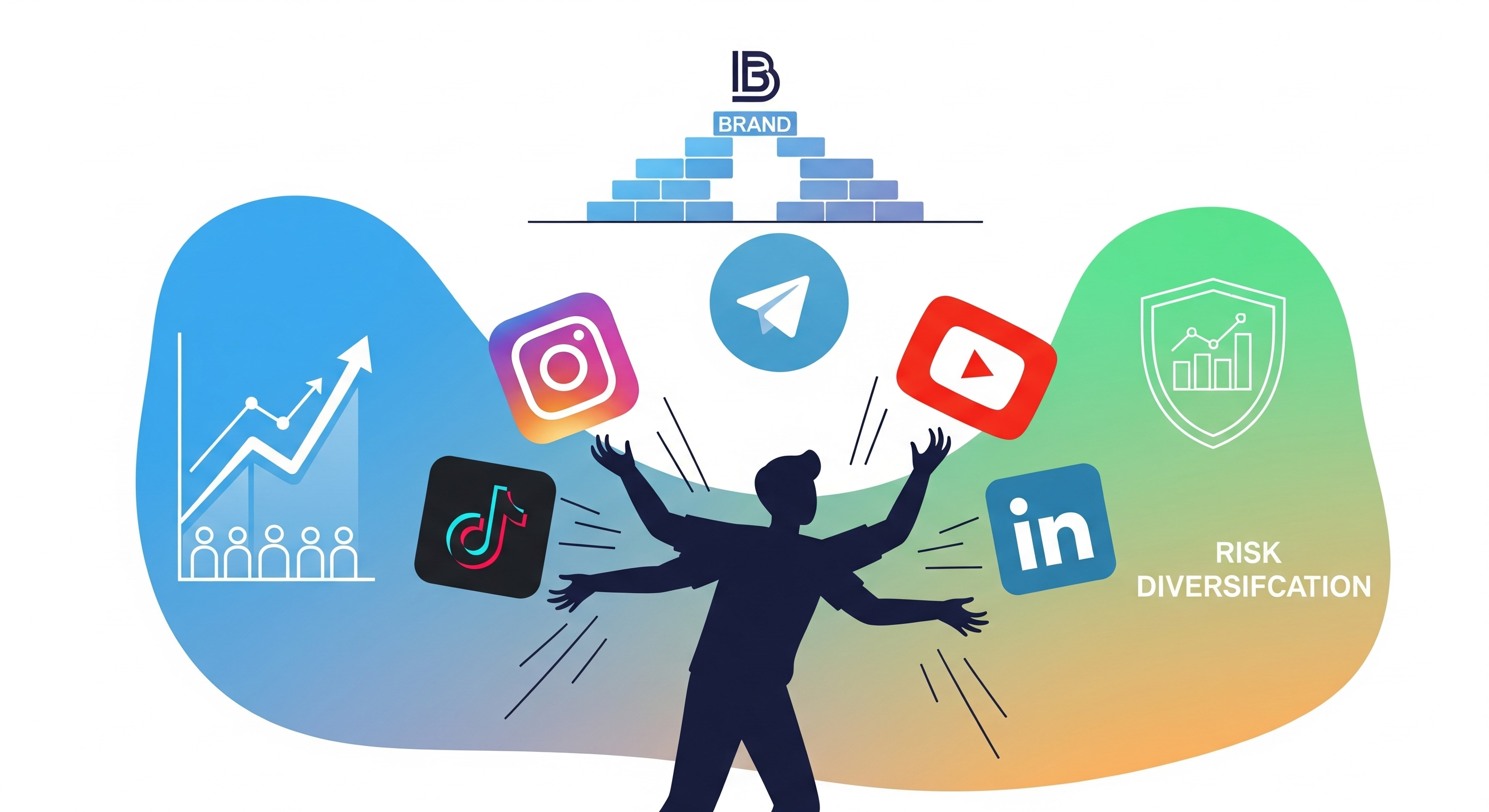
In 2025, many entrepreneurs make the mistake of relying on just one marketing channel. For example, they focus only on Instagram or only on Telegram. At first glance, this may seem sufficient: all attention is concentrated in one place, and managing content and communication feels easier. But in reality, this is a risky strategy that can limit business growth. In our article, we’ll explain why you shouldn’t depend on a single channel, why it’s better to run 3–4 across different platforms, and share tips on how to do it effectively.
1. Broader Audience 🌍
Using only one channel cuts off a whole section of potential customers. But having 3-4 accounts on different platforms allows you to reach a much wider audience: some will find out about you in search, others will see you on TikTok or YouTube, and still others will see you through Instagram or LinkedIn.
Instagram — visual content and quick consumption;
Telegram — users who prefer analytics and “closed” communities;
YouTube — people looking for in-depth explanations and long-form content;
LinkedIn — professional audience and business networking.
TikTok — short, engaging, and often trend-driven videos that capture attention quickly
Google Business Profile — often overlooked but powerful for small businesses. A properly set-up profile shows your hours, contact info, reviews, and posts, working 24/7 as a “digital storefront” that drives calls, visits, and inquiries.
Each platform has its own strengths and content styles, so experimenting with different formats — like short videos, carousels, tutorials, or posts — helps you connect with each audience segment effectively.
2. Diverse content formats 📹
Practical Tips for Posting Across Channels:
Instagram — visual stories (photos, reels, carousels). 3–5 posts per week + daily Stories to engage the audience.
Telegram — ideal for in-depth updates, news, or tips. Post 2–4 times per week, but make sure content is valuable and exclusive to keep subscribers engaged.
YouTube — make lots of Shorts for reach and quick engagement, and publish long videos less often (1–2 times a month) for deeper explanations and case studies, or on special occasions, such as the release of global updates.
LinkedIn — share professional insights, company news, and thought leadership. Post 2–3 times per week, with occasional articles for deeper engagement.
TikTok — it's all about short videos for trends and quick reach. The more the merrier, you can start by posting 2-3 times a week, experimenting with formats and hashtags.
Instead of creating entirely new content for every platform, you can adapt one piece to fit different formats and audiences. For example:
A YouTube tutorial can be condensed into a carousel post on Instagram, highlighting the key steps or takeaways.
Short, engaging clips from the same tutorial can be posted as TikTok videos, using trends or sounds to increase reach.
A LinkedIn post can summarize the tutorial’s insights for a professional audience, emphasizing business results or industry tips.
Telegram can host a more in-depth version or behind-the-scenes commentary, giving your most engaged audience exclusive content.
Repurposing content not only saves time, but also reinforces your message across multiple touchpoints. Seeing your brand or expertise in several places increases trust and recall among your audience.
3. Increased Sales and Leads 💰
Being visible across multiple platforms doesn’t just build brand recognition — it directly supports sales and lead generation. A potential customer might not act after the first encounter, but seeing your brand on Telegram, Instagram, and YouTube increases trust and makes them more likely to engage, subscribe, or purchase.
Different channels serve different purposes:
Share breaking updates quickly on Telegram.
Showcase expertise and in-depth tutorials on YouTube.
Post visual highlights and carousels on Instagram.
💡 Practical tip: Drive cross-platform engagement by using teasers and tailored interactions. Share a short preview of a YouTube video or Instagram carousel on Telegram or TikTok with a call-to-action like “Check out the full guide on YouTube,” and encourage platform-specific engagement — run polls on Instagram Stories, ask discussion questions on LinkedIn, or host quick Q&A in Telegram. This approach boosts leads, sales, and overall audience interaction.
4. Risk Distribution ⚠️
Social media platforms and digital channels constantly update their algorithms. What brings thousands of impressions today could drop significantly tomorrow. But the risks aren’t limited to algorithm changes — accounts can be blocked due to rule changes, user complaints, or even hacked or stolen. If your business relies on just one channel, any sudden issue can immediately cut off your audience and slow growth.
By managing 3–4 active accounts, you spread the risk. Even if one channel underperforms or faces technical issues, your other channels continue to engage your audience and generate leads. This approach protects your reach and ensures more stable, long-term growth.
Example: Suppose your business depends only on YouTube. One month, YouTube changes its search ranking criteria, or your account gets temporarily blocked. Views and subscriber growth drop. However, if you also maintain Instagram, TikTok, and Telegram channels, your audience can still discover your content elsewhere. Diversifying reduces the impact of sudden changes and maintains consistent growth.
 Risk Distribution
💡 Pro tip: Track performance across all channels regularly. Monitor which platforms drive the most engagement and conversions, adjust your strategy, and reduce dependence on any single channel.
5. Manage Multiple Accounts Easily with PostPulse ⚡
Running 3–4 channels can feel overwhelming, but tools like PostPulse make it much easier. You can schedule posts in advance, automate publishing, and manage content across platforms all from one dashboard.
 PostPulse — Manage Your Time Wisely
Post across multiple platforms in one go. Save time by queuing updates for Instagram, TikTok, YouTube, LinkedIn, X, and Telegram together.
Start simple with cross-posting: initially, you can publish the same content across platforms without adapting it. Later, gradually adjust posts to better suit each platform and audience. Batch your content planning — spend one session scheduling the week’s posts to stay consistent and stress-free. Step-by-step guide here How to Plan a Week of Social Media Content in 30 Minutes.
💡 Practical tip: Use PostPulse’s analytics features to see which platforms and post types drive the most engagement. For example, you might notice your tutorials perform best on YouTube, while short tips get higher interaction on TikTok. Adjust your strategy accordingly to maximize reach without extra effort.
💡 Mini hack: Encourage user interaction differently per platform. For example, run polls on Instagram Stories, ask discussion questions on LinkedIn, or use Telegram chat for quick Q&A. This keeps your audience engaged in ways that suit each channel’s strengths.
Final Thought 🚀
Relying on a single marketing channel may seem easier, but it’s a risky strategy that can limit growth and audience reach. By managing 3–4 platforms, you spread risk, access different audiences, strengthen your brand, and gain flexibility in your marketing efforts.
With practical strategies, smart cross-platform content, and tools like PostPulse, entrepreneurs can save time, maintain consistency, and maximize engagement across multiple channels. Start small, stay consistent, and gradually expand your presence — your business will thank you for it in the long run.
About the Author

Hnatiuk Dmytro is a Content Manager at PostPulse, experienced in copywriting, localization, and social media marketing. Skilled in creating engaging content strategies, managing multi-platform campaigns, and optimizing posts for audience engagement. He also has technical skills in HTML, JavaScript, Node.js, and C#, with a background in cybersecurity. Outside of work, Dmytro is a musician, enjoys playing and listening to music, stays active through sports, and values connecting with people