Find Who Doesn't Follow Me Back: Automate Social Audits
Published on
Tags:
You open Instagram to answer a simple question. Who doesn't follow me back? Ten minutes later, you're tapping through profiles like a QA engineer trapped in the world's worst regression test. Open account. Check Following. Search your own username. Back out. Repeat. Somewhere between the fifteenth profile and the second accidental refresh, the whole thing stops feeling like curiosity and starts feeling like unpaid data janitor work.
That frustration isn't just a creator problem. Developers run into the same wall when they try to build anything around follower audits. The platforms expose just enough surface area to make the task look easy, then shut the door when you try to do it safely at scale. Old unfollower apps disappear, tokens break, permissions get tighter, and the “easy” tools usually want the one thing you should never hand over: your password.
If you've been burned by social APIs before, this pattern is familiar. The hard part isn't comparing two lists. The hard part is getting the lists legally, reliably, and without triggering account flags. That's where most advice falls apart.
Table of Contents
The Maddening Quest for Unfollowers
You notice it after a growth push. The follow count climbs fast, the follow-backs do not, and now someone wants a clean list of every account that never returned the follow. That request sounds trivial until you try to do it without scraping, credential sharing, or a tool that gets the account challenged two days later.
The typical workflow starts with a flawed premise. People assume the answer already exists somewhere inside the app and they just have to find the right screen. It usually does not. Instagram exposes enough UI to let you inspect relationships one account at a time, but not enough to turn reciprocity checks into a sane repeatable process. A consumer-facing summary of that pain shows up in this Instagram unfollower guide 2026.
That is why this stops being a vanity question and turns into an operational one. Creators use it to clean up aggressive follow-for-follow experiments. Agencies use it to avoid reporting on bloated following counts that make accounts look sloppy. Developers get dragged into it because the request lands right after analytics, publishing, and inbox features, usually with the assumption that unfollower tracking should be the easy part.
It is not.
The manual approach is pure list reconciliation done through a hostile interface. Open your Following list. Open another profile. Check whether your username appears in their Following list. Repeat until your patience or the app gives out. The logic is simple. The workflow is miserable.
That mismatch is what trips people up. The comparison itself is basic set math. The hard part is access, rate limits, account permissions, and the fact that platforms have little incentive to make reciprocal tracking convenient. After working with social APIs for a while, the pattern gets obvious. If a feature encourages bulk monitoring of other users, expect friction by design.
Why Finding Non-Followers Is Harder Than It Looks
You ship a follower audit, schedule it to run every hour, and by the end of the week one of two things happens. The numbers are wrong, or the account gets pushed into enough friction that support tickets start landing.
That failure pattern is common because non-follower tracking sounds like simple set subtraction and behaves like access-control engineering. The math is easy. Getting the two lists reliably, repeatedly, and within platform rules is the part that breaks.
The platforms limit the obvious approach
The old crop of unfollower trackers worked until platforms closed the loopholes they depended on. Scraping became riskier. Weak authentication flows got shut down. Endpoints that looked usable on paper stopped being useful at production scale.
Instagram is the cleanest example of the problem. The platform does not reward apps that monitor relationship graphs aggressively, especially for personal accounts. A lot of teams discover this late, after design is done and somebody asks why the feature only works for certain account types or requires extra setup. If you need a broader reference on how Instagram account capabilities differ, our guide to Instagram platform constraints and workflows covers the practical implications.
Then rate limits enter the room. Instagram API usage can hit ceilings fast. PostProxy's summary of current rules notes a drop to 200 calls per hour per Instagram account in some access scenarios, which changes what a “live” audit can realistically do at scale (PostProxy API rules summary). For a small utility app, that is annoying. For an agency dashboard reconciling multiple accounts, it is an architectural constraint.
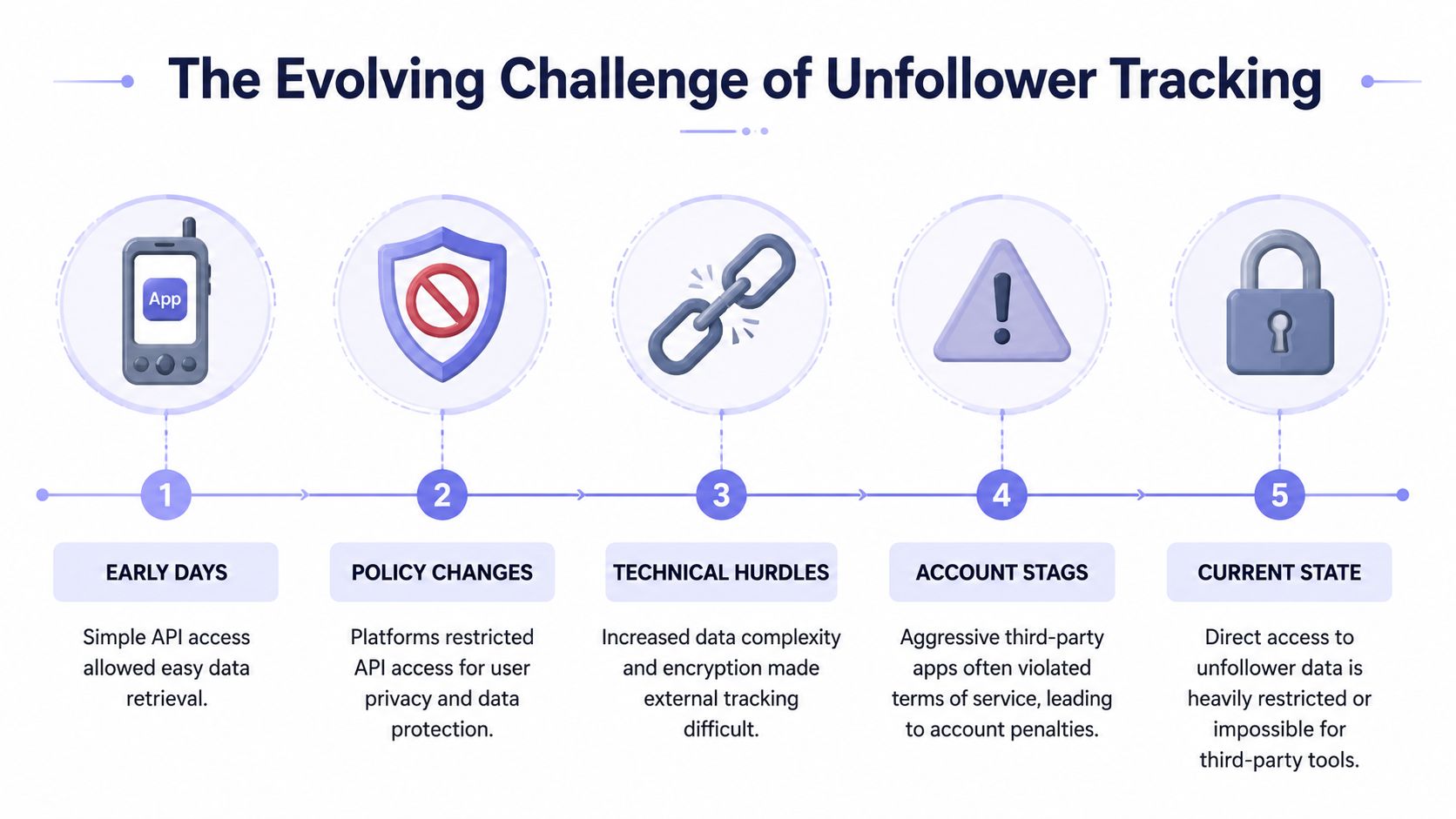 A timeline graphic illustrating the evolution and increasing difficulty of tracking unfollowers on social media platforms.
Consumer advice often skips straight to app recommendations, which obscures the underlying problem. Tool quality matters, but the access model matters first. This Instagram unfollower guide 2026 is useful for that reason. It reflects how constrained the user-side workflow has become, even before you add automation.
Why polling sounds smart and performs badly
Polling follower data every hour looks disciplined. In practice, it burns budget on unchanged data, creates timing gaps, and still misses context around private accounts, delayed syncs, or incomplete permission scopes.
Instagram also applies usage formulas that make naive polling expensive for lower-reach accounts. Blotato's summary notes a Business Use Case limit calculated as 4,800 × Number of Impressions per day (Blotato's Instagram API pricing and limits summary). That means a well-behaved app can still end up with a small call budget if the account does not generate many impressions.
That forces trade-offs:
Approach | What happens |
Frequent polling | Wastes calls on mostly unchanged lists and increases the chance of stale or partial comparisons |
On-demand scans | More practical, but still needs caching, retries, and batching to avoid noisy results |
Export-based audits | Slower, but usually closer to what the platform tolerates and easier to verify |
I treat any promise of live, unrestricted, always-accurate unfollower tracking as a warning sign.
The technical reason this got harder is straightforward. Platforms reduced the amount of relationship data you can pull cheaply and often. Once that happens, a “who doesn't follow me back” feature stops being a UI problem and turns into a data acquisition problem.
The Manual Grind A Platform-by-Platform Guide
If you insist on doing this by the book, there is a legitimate baseline. It's not elegant. It is useful because it gives you a clean source of truth without scraping.
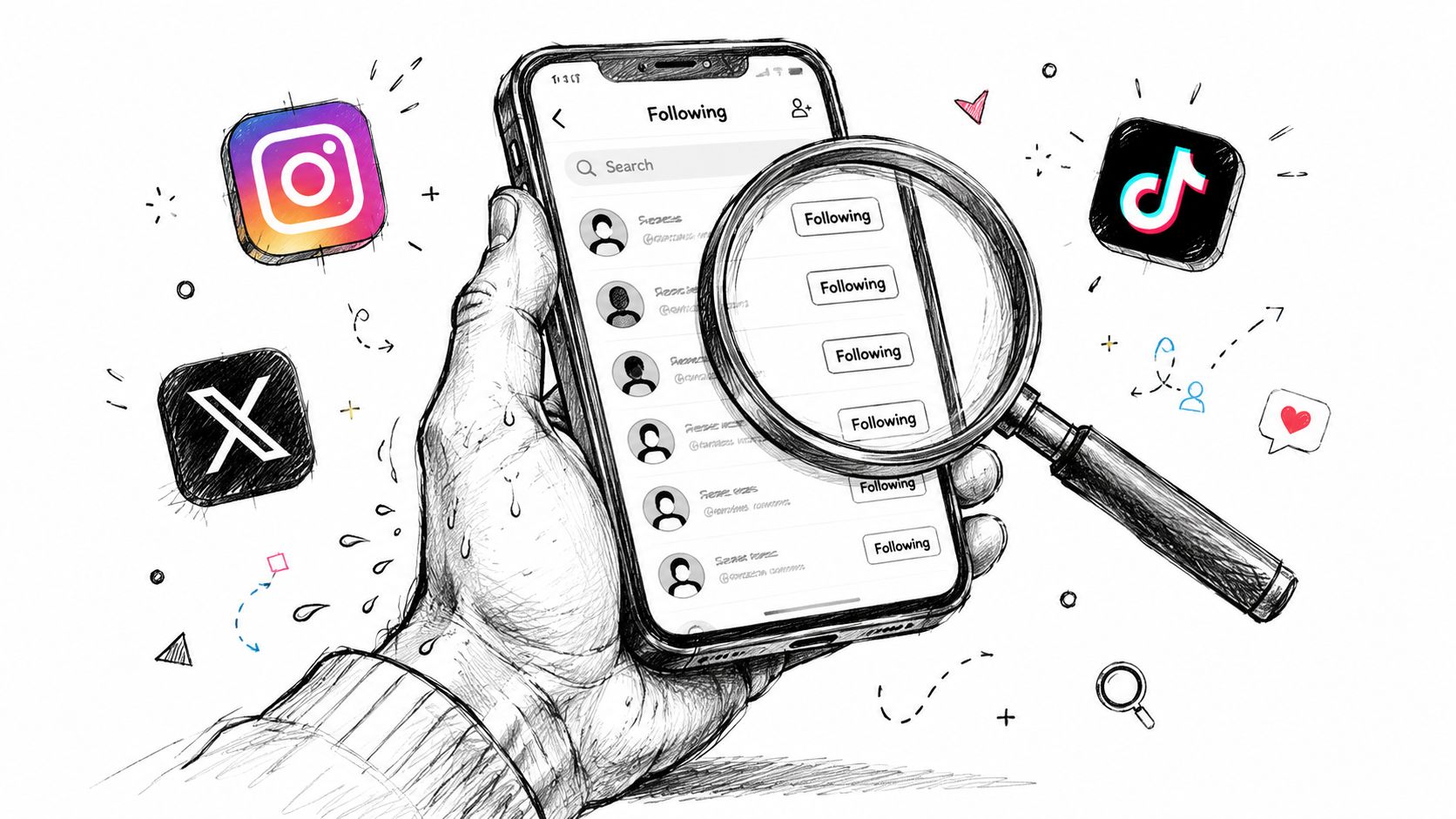 A hand holding a smartphone showing a follower list while being inspected by a magnifying glass.
Instagram has an official path, but it's clunky
Instagram's most reliable method is a data export through Meta's Accounts Center. To accurately identify non-followers, you request a complete account history download in JSON with both Followers and Following lists. The export can arrive by email in a few minutes to a couple of hours, and for large datasets it can take even longer, according to Nahed Nakib's walkthrough of the export process.
The path looks like this:
Request the export: In Meta's Accounts Center, ask for account data and make sure the date range is All time if you want a complete history.
Choose machine-readable data: Use JSON, not a prettier format meant for human reading.
Wait for the ZIP file: Don't expect instant results if the account has a long history.
Extract and compare: Pull the follower and following arrays, normalize usernames, then diff them.
For teams already doing social ops, this is a decent sanity check. It's also a reminder of how much manual labor hides behind the phrase “just find who doesn't follow me back.”
If you manage Instagram as part of a broader publishing stack, it helps to keep the platform context straight. The Instagram platform overview is a useful reference for the account types and publishing surface you're working with.
Other platforms are mostly UI workarounds
X, LinkedIn, and similar platforms usually push you toward one of two bad options. You either manually inspect profile relationships in the UI, or you depend on a third-party layer that may or may not survive the next policy change.
A reasonable manual playbook looks like this:
For X: Use the native follower and following views, then spot-check priority accounts rather than trying to audit everybody.
On LinkedIn: Treat reciprocity as secondary. Connection and follower models differ enough that “follow back” isn't always the right question.
For mixed-platform audits: Keep a spreadsheet with last-checked dates and only re-audit segments that matter, such as partners, prospects, or inactive follows.
Manual checks are fine for a handful of accounts. They become operational debt the moment you try to turn them into a weekly habit.
That's the important part. The manual route is a baseline, not a strategy.
Using Third-Party Tools Without Getting Burned
Open your DMs after using a random unfollower app for a week and you start seeing the same pattern. Forced re-logins. Security challenge emails. Sessions getting revoked for no clear reason. That is usually the cost of a tool that promised convenience by sitting on top of scraping, brittle browser automation, or direct credential capture.
The market exists because native platforms make relationship auditing annoying. The catch is that many tools solve the UX problem by creating an account risk problem.
What to reject immediately
Any app that asks for your Instagram password directly is a bad bet. Serious products use official auth flows where the platform allows them, or they rely on exports and slower audit workflows. Password collection is a signal that the vendor needs access the platform did not intend to grant cleanly.
Use a short filter before connecting anything:
Check the login flow: OAuth or another platform-approved connection path is safer than handing over credentials.
Check the scope: If the tool wants posting, messaging, and profile management access just to show follower mismatches, it is overreaching.
Check the data source: Export-based analysis is slower, but it is often less fragile than tools pretending they can monitor everything live.
Check the operating model: Apps built around constant unfollow alerts tend to push behavior that looks spammy fast.
If you want a cross-platform reference point, Xholic AI free follower tools is useful to scan. The value is not the rankings. It is seeing how often these products trade safety and durability for speed.
What these tools are usually doing under the hood
This part gets skipped in consumer roundups, but it matters.
A follower tracker usually falls into one of three buckets. It scrapes the web UI. It automates a logged-in browser session. Or it works from exported account data and compares snapshots over time. The first two feel faster until the platform changes markup, rate limits a pattern, or decides the login behavior looks suspicious. The third option is boring. It is also the one least likely to get your account challenged.
That trade-off matters more than feature lists. Real-time alerts sound nice until they depend on polling patterns that your account cannot sustain safely.
What to measure instead of chasing names
Single-account obsession is rarely the right operating model. The better question is whether your follow behavior is making the account look messy, low-signal, or obviously transactional. As noted earlier, a lopsided follower-to-following ratio can become its own problem, even before you care about any specific non-follower.
That changes how a good tool should be used:
Bad use | Better use |
Who unfollowed me today? | Which follow segments have gone stale and deserve review? |
Can I mass-remove people fast? | Can I clean up in small batches without triggering trust issues? |
Can I monitor every account constantly? | Can I run scheduled audits for the accounts that matter? |
The safer category is workflow automation, not revenge analytics. If you are comparing vendors, look for products built around exports, scheduled reviews, approval steps, and logging. A broader social media automation tools guide is a better starting point than another "see who unfollowed you" app list.
The Developer Approach Automating Follower Audits
A technical workflow for this problem starts with an uncomfortable fact. On most platforms, "who doesn't follow me back" is not a first-class API feature. You usually end up stitching together snapshots, account permissions, token handling, and a diff job, then spending more time on failure modes than on the actual comparison.
 Screenshot from https://post-pulse.com
Start with the constraints, not the code
Teams get this backwards all the time. They prototype a clean set-diff, then discover the platform only exposes part of the graph, requires a specific account type, or makes frequent polling a bad idea.
Instagram is a good example, as noted earlier. Access rules depend on account setup, permissions, and the Meta side of the integration. That matters even if your goal is reporting, not posting, because the account model tells you what kind of automation the platform will tolerate.
Build around a few boring assumptions:
Freshness is limited: Daily or weekly audits are realistic. "Instant unfollow alerts" usually create more platform risk than value.
Tokens expire: Refresh flows, reauth paths, and permission loss need to be in the first version.
Rate limits shape the product: Polling strategy is part of the design, not cleanup work for later.
Exports still matter: In some cases, a user-provided export is more stable than a fragile integration that breaks every time the platform changes behavior.
Implementation note: The diff is easy. Authentication, rate limiting, retries, and account-type edge cases are where the engineering time goes.
If you need a repeatable review process around account cleanup, a checklist helps more than another dashboard. This social media operations template is useful because it turns cleanup into scheduled operations instead of reactive checking.
A sane automation workflow
A practical build in n8n, Make, or a small internal script looks like this:
Run on a schedule: Daily is plenty for active accounts. Weekly is fine for most others.
Collect the current state: Pull follower and following snapshots from the approved source you have.
Normalize identifiers: Usernames drift. Stable IDs are better. If you only have handles, normalize casing and formatting the same way every run.
Compute the diff:
following - followers = non-reciprocal followsStore the output somewhere boring: Sheets, Airtable, Notion, or a database all work if the history is preserved.
Review before acting: Flag accounts for cleanup. Do not wire detection straight into automatic unfollows.
Here's a video walkthrough that fits the automation mindset well:
Two design choices save a lot of pain later.
First, keep snapshots. A current list without history only tells you the present state. Historical snapshots let you answer the useful questions: who has been non-reciprocal for 30 days, which accounts changed names, and whether a result is persistent or just timing noise.
Second, separate auditing from account actions. Detection should produce a review queue, not trigger relationship changes. That split protects you from bad data, edge cases, and the kind of aggressive behavior that gets accounts challenged.
If you plan to productize this, the hard part is not fetching two arrays. The hard part is owning platform auth, retries, permission drift, and API changes across networks. A good API for social media integrations should reduce that maintenance load, not just proxy requests.
Shifting Focus from Unfollows to Engagement
The dirty secret is that even if you build the perfect audit, the result often isn't worth the emotional overhead. You got the list. Now what? Most of the time, nothing strategic changes.
The metric can become the problem
This isn't just a vibes argument. 70% of social media users report feeling insecure after an unfollow, and research cited by Headspace found a significant association between negative emotions and increased follower counts, according to Headspace's piece on why being unfollowed hurts.
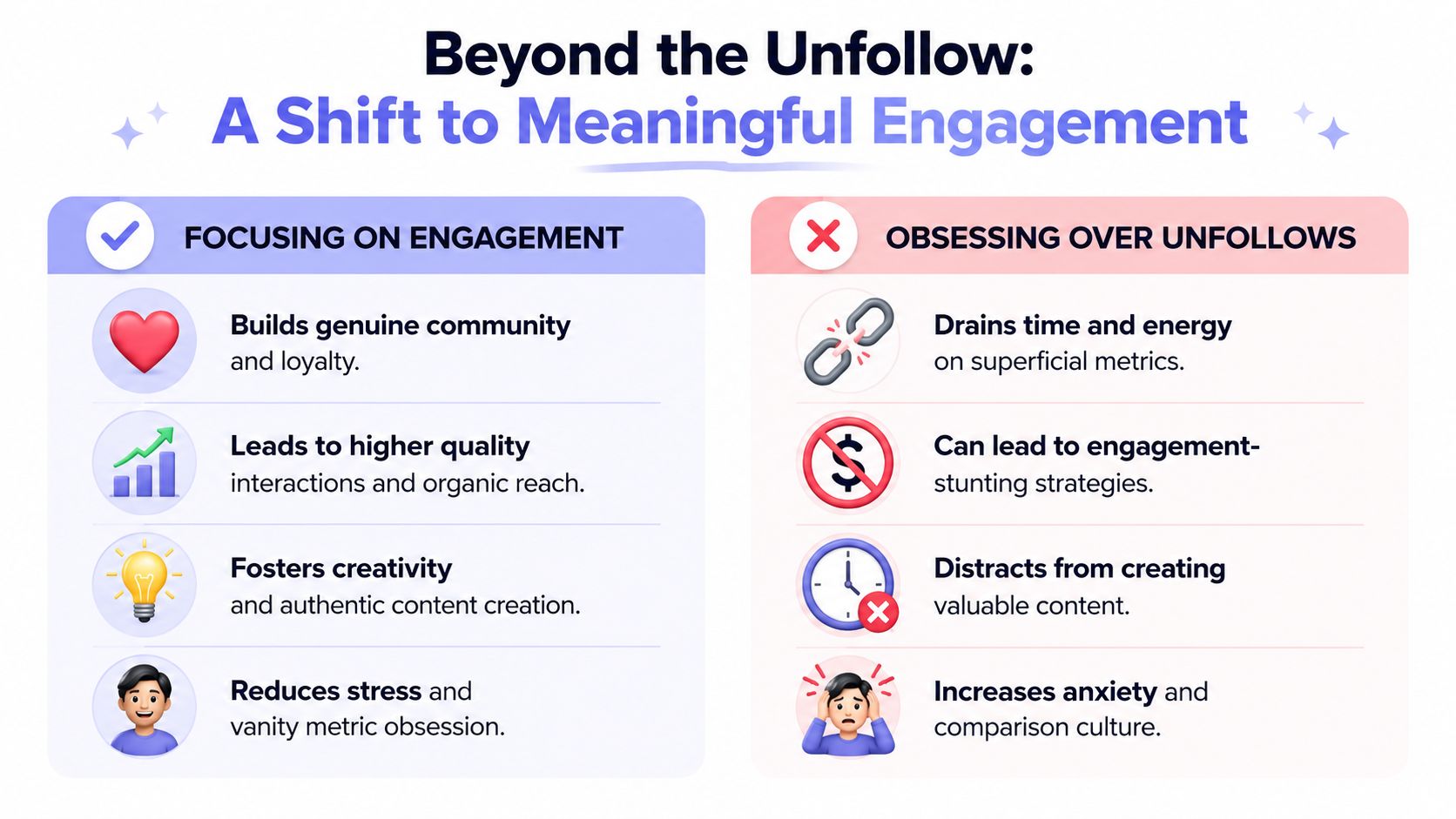 A comparison chart showing the benefits of focusing on engagement versus the negatives of obsessing over unfollows.
That tracks with what these tools encourage. They turn a relationship graph into a low-grade anxiety loop. You check because you want clarity. You keep checking because the product is designed to make uncertainty feel actionable.
A better operating model looks like this:
Track conversations: Comments, replies, and direct audience interaction tell you more than a missing follow.
Review saves and shares: These are stronger signals of content value than reciprocity.
Identify repeat engagers: The people who reliably respond matter more than silent followers.
Audit content themes: If engagement drops after a content shift, that's a useful signal. A random unfollow usually isn't.
The strongest social accounts rarely win by policing exits. They win by giving the right people a reason to stay.
Build for engagement, not ego defense
If you're going to spend engineering time, point it at metrics that can change decisions. Build dashboards for post-level engagement quality. Segment active advocates. Alert on meaningful comment spikes. Classify recurring audience questions. That kind of instrumentation helps creators, brands, and internal teams make better content.
Chasing “who doesn't follow me back” has one legitimate use. Hygiene. It can help you clean up bloated following lists or spot outreach patterns that aren't working. Beyond that, it's usually a vanity metric wearing an analytics costume.
Senior-level advice here is simple. Audit follower reciprocity occasionally. Audit engagement continuously.
If you want the infrastructure side handled without fighting every platform one by one, PostPulse is built for exactly that kind of workflow. It gives developers, automation builders, and AI agents one integration surface for publishing across multiple social platforms, so you can spend your time on the logic that matters instead of babysitting auth flows, token refreshes, and platform churn.
About the Author

Founder of PostPulse — a social media scheduling platform for creators and teams. Software engineer with a passion for building developer tools and simplifying complex API integrations across social media platforms.